The Most Impressive Leat on Dartmoor is on Our Doorstep
If you’re interested in Dartmoor’s leats and their precise 1800s engineering, you’ll love staying with us. The most impressive leat on Dartmoor, Wheal Friendship Leat (also known as Reddaford Leat or Mine Leat) is just 3 miles from our holiday park.
Wheal Friendship Leat is one of the best Dartmoor leat walks with easy access. The 4.5 mile Tavy Cleave circular walk is moderately challenging with easy parking and access from Lane End car park. It’s a great day out, complimenting the Tavistock Canal walk perfectly.
Wheal Friendship Leat near Langstone Manor Park
Built to bring water to the Wheal Friendship mine in Mary Tavy over 200 years ago, this particular leat is still in use today. This Dartmoor leat carries water for about 4.5 miles to the Wheal Jewell Reservoir, as well as bringing water for livestock, agriculture and other water-loving creatures like damsel and dragonflies on Dartmoor along the way.
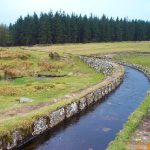
The ancient infrastructure helps to feed our modern Mary Tavy Hydroelectric Power Station. South West Water actively maintains this leat to keep water flowing and prevent it from collapsing, thanks to its Scheduled Ancient Monument status. Future generations will be able enjoy this amazing piece of engineering for years to come.
How does a leat work?
The purpose of the leats on Dartmoor is to deliver water from nearby rivers to farms, mines and even single households. The construction uses precise steps to ensure the water can travel for miles using only the force of gravity to propel it:
- The mouth of the leat
Dartmoor leats begin with a diversion. Engineers typically build a small dam or weir across the river, raising the water level slightly. This creates a constant volume of water at the leat’s mouth, even when the river level is low.
- Following the landscape
To keep the water moving, the leat must always be slightly lower than the point behind it. This is the most magical part of a leat’s design; ensuring the waterway is steadily dropping slightly from the mouth. The trick is to keep lowering the waterway without it becoming so steep the water picks up enough pace to erode the banks. This is done using two techniques:
- The Balcony Effect: The leat hugs the hillside. These manmade Dartmoor waterways often look like a wavy lines on a map, mimicking the shape of the mountain.
- Precision Gradients: Many Dartmoor leats, like the one at Tavy Cleave, drop only a few inches per mile. This incredibly slight decline creates a famous optical illusion: stand beside it, and the water appears to be flowing uphill against the natural slope of the moor.
- Construction and lining
Dartmoor’s leats have to be made watertight because our soil is porous peat or loose granite. Leats on Dartmoor tend to be lined with puddled clay or granite walling.
- The Head and the Tail of Leats on Dartmoor
When the leat eventually reaches its destination, the precisely engineered height creates the power needed for the water to do the work it was summoned for.
- Creating energy: By keeping the leat high up on the hillside, the engineers create a head—a vertical distance between the water in the leat and the machinery below. The water then drops down a pipe to hit a waterwheel or a turbine. The weight and speed of that falling water provides the mechanical power.
- Releasing the water: Once the water has done its work, it’s released into a tail race and usually sent back into the original river further downstream.
Exploring Dartmoor’s Leats
Leats are incredibly durable because they’re passive systems. As long as the intake is kept clear of debris and the banks aren’t breached, the water will keep flowing centuries without a single pump or motor.
You can explore Dartmoor’s leats on your own with an Ordinance Survey (OS) Map of Dartmoor. These can be bought online or at the Tavistock Information Centre. If you’re more tech-minded, the Komoot walkers app is great because it allows for offline navigation. All Trails share multiple routes for exploring Dartmoor leats.
We’re one of the closest holiday parks to the most impressive of all the leats on Dartmoor! Book a stay with us in one of our cottages, camping, glamping or caravanning sites and go explore our historic Dartmoor leats this summer!